Property Taxes Are Rising Fast Across North Jersey, Is Your Town on the List?
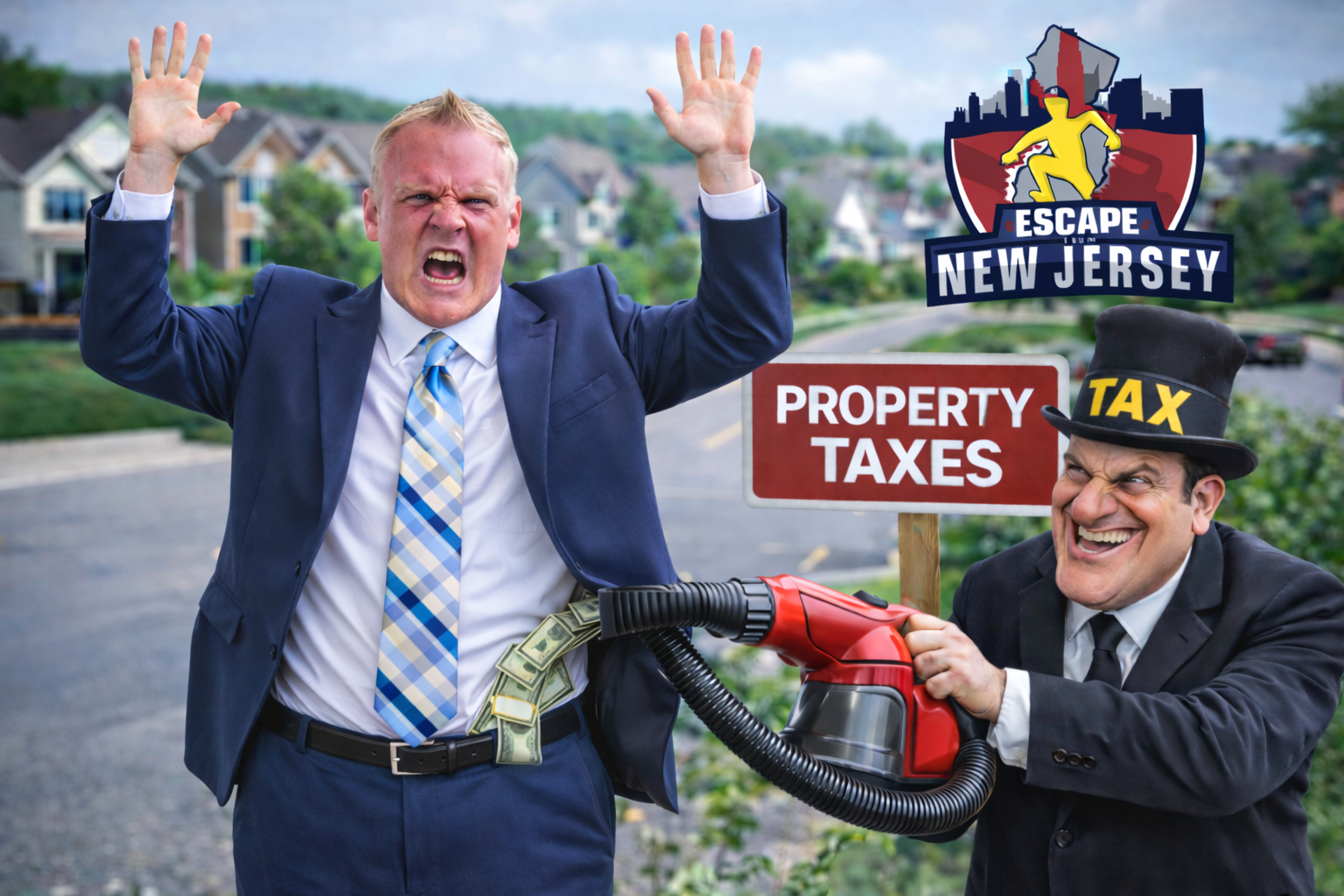
Rising property taxes across North Jersey are putting pressure on homeowners, forcing many to reconsider whether staying long term still makes financial sense.
If you live in North Jersey, opening your property tax bill each year feels less like a surprise and more like confirmation. You expect it to be higher. The only question is how much higher this time.
For 2026, the statewide average property tax bill sits above $10,500 for the second straight year. But that number masks what many homeowners in Bergen, Passaic, Essex, Sussex, Union, Hudson, and Somerset counties are actually experiencing. In many North Jersey towns, the increases are far more noticeable than the statewide average suggests.
Recent town-by-town data shows that rising property taxes are not limited to one county or housing type. The pressure is regional, affecting suburban communities, urban municipalities, and smaller towns alike.
North Jersey Towns With Some of the Largest Recent Property Tax Increases
Comparing 2024 to 2025 municipal tax data reveals that several towns across North Jersey saw especially sharp jumps.
Among the largest reported increases:
• Millstone, Somerset County, roughly 21.7 percent
• Irvington, Essex County, roughly 14.1 percent
• Hillsborough, Somerset County, roughly 12.4 percent
• Franklin Township, Somerset County, roughly 11.8 percent
• Totowa, Passaic County, roughly 8.4 percent
• Montague, Sussex County, roughly 8.1 percent
• Paramus, Bergen County, roughly 8.0 percent
• Lyndhurst, Bergen County, roughly 8.0 percent
• Hillside, Union County, roughly 7.9 percent
• Maywood, Bergen County, roughly 7.7 percent
This mix of towns across multiple counties reinforces that rising tax pressure is not isolated to one region. The drivers vary by municipality, but the upward trend is widespread.
Why Property Taxes Vary So Much by Town
Property tax changes often differ dramatically between municipalities because of how New Jersey funds local services.
Several factors can cause large year-to-year increases:
• Property reassessments that update home values
• Changes in school funding requirements
• Infrastructure or capital spending needs
• Shifts in the commercial tax base
• Rising labor and service costs
Some towns see gradual increases every year. Others experience larger jumps after reassessments or budget adjustments. Either way, the long-term direction rarely trends downward.
A Regional Trend, Not a Local Exception
Even towns that did not experience sharp spikes are still seeing steady increases.
Over the past five years, several forces have reshaped the financial reality of homeownership across North Jersey:
• Pandemic-era demand pushed home prices higher
• Inflation raised the cost of municipal services
• Insurance, utilities, and maintenance expenses climbed
• School funding continues to rely heavily on local taxes
Because property taxes fund a large share of local government and education budgets, higher costs at the municipal level almost always translate into higher tax bills for homeowners.
Who Is Feeling the Impact Most
Retirees and long-time homeowners
Many residents who bought decades ago now sit on significant equity, but their income may be fixed. When annual property taxes reach five figures, it can change the math of retirement planning.
Rental property owners
Landlords in towns across Hudson, Essex, Passaic, and Union counties are seeing margins tighten. Rising taxes are not always easily passed to tenants, especially in rent-sensitive markets.
Working families
Even households with stable incomes are feeling the squeeze. When property taxes rival a second housing payment, financial flexibility shrinks.
High Taxes and High Equity Exist at the Same Time
Despite rising costs, North Jersey real estate continues to hold strong value.
Limited housing supply, access to employment centers, and commuter infrastructure keep demand relatively steady. Many homeowners now have far more equity than they did just a few years ago.
This creates a complicated financial reality. A homeowner may be wealthier on paper but feel more stretched month to month.
Relief Programs Offer Help, But Do Not Change the Structure
State programs such as ANCHOR and StayNJ provide rebates and credits designed to offset some of the burden.
For certain households, these programs provide meaningful assistance. However, they do not change the underlying structure of New Jersey’s reliance on property taxes to fund schools and municipal services.
As a result, relief programs tend to soften the impact rather than reverse the long-term trend.
When Rising Taxes Become a Decision Point
A higher tax bill alone does not mean someone should sell their home. But it often serves as a signal to take a closer look at long-term plans.
Homeowners benefit from understanding:
• Their home’s current market value
• Realistic net proceeds after selling costs
• Downsizing or relocation options
• Five-year projections of housing expenses
Some homeowners conclude staying makes sense. Others realize that unlocking equity now could better support retirement goals, relocation plans, or lifestyle changes.
The important thing is making that decision deliberately rather than reactively.
Final Thoughts
Property taxes in North Jersey have been high for decades. What is changing now is how quickly they are rising in some towns and how they intersect with inflation, interest rates, and shifting life priorities.
For some homeowners, this year’s increase will feel manageable.
For others, it may be the moment they begin asking whether staying long term still makes financial sense.
If you are curious what your home could sell for in today’s market, or what relocating out of New Jersey might realistically look like, you can start here:
https://www.escapefromnewjersey.com/sellmynewjerseyhome
Getting clarity on your numbers does not mean you have to move. It simply gives you the information needed to decide what makes the most sense for your finances, your timeline, and your future.
